True Love: The Anchor in the Stormy Seas of Life
True Love: The Anchor in the Stormy Seas of Life
True love is the contradictory nature of an anchor—it anchors us while simultaneously allowing us to navigate life's massive seas. Such a powerful metaphor describes the character of profound romantic love, which explains why imagery of anchors occurs repeatedly in love poetry, nuptial vows, and love philosophy.
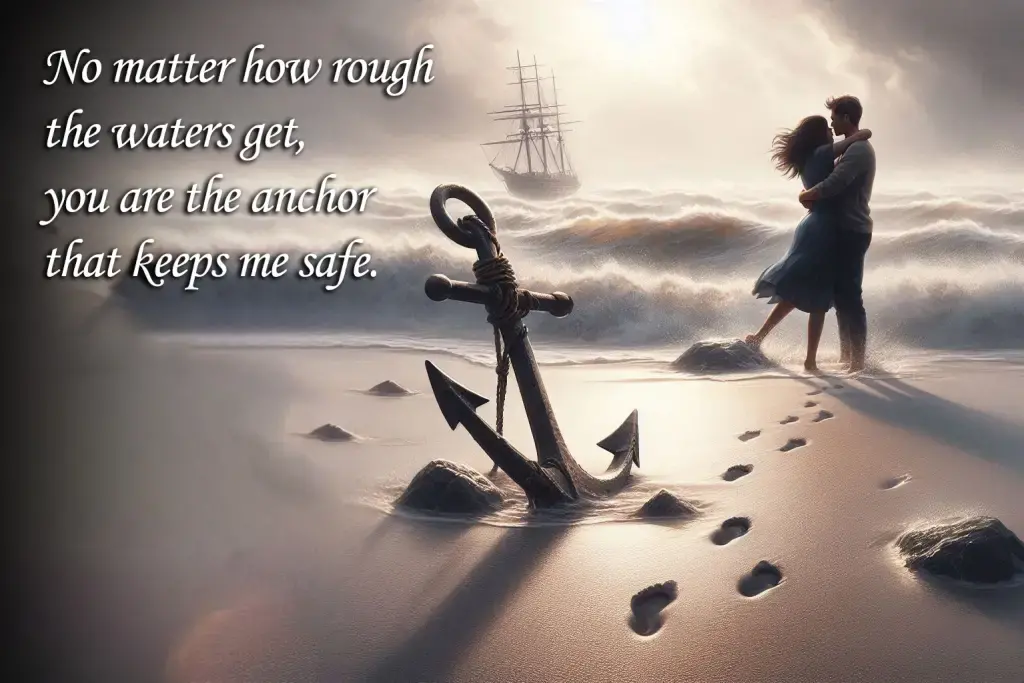
"My soul had an anchor in the bottom of your ocean," wrote poet Pablo Neruda, describing how real connection provides us with weightlessness without limit. An anchor, a literal anchor, a real love provides us with needed heaviness—the comforting knowledge which prevents us from颅ripping wildly down life's currents. And this solidity strangely frees us to be even more unencumbered, the firm foundation on which we explore the world without fear.
The comparison is true because love and anchors must remain in equilibrium. Too heavy, they smother and kill growth. Too light, they do not provide the stability life requires for the storms life promises. As relationship counselor Esther Perel says, "The very things that sustain love—security, predictability, reliability—can smother desire in the long term." The anchor example understands the paradox—the yearning to be firmly anchored but to be also capable of yielding to the natural movement of life. Explore this strong love which is like an anchor with quotes on soinspiring.
Maritime historical symbolism layers another meaning. Anchors were signed by mariners to mark surviving the Atlantic—a lengthy and difficult voyage that requires commitment, perseverance, and courage. Similarly, real love is life's greatest journey, irrevocably altering those who are willing to embark on it. "In you, I've found my harbor, my anchorage, my forever home," Atticus, a contemporary poet, writes, expressing this sense of arrival after emotional travel.
When relationship storms inevitably break—discord, adversity, outside pressure—the anchor iconizes unwavering loyalty. "Our love stood fast against the storm," says an old sailor's love letter, echoing the anchor's only purpose: holding fast exactly when stability is most elusive. This is why anchor imagery shows up at relationship turning points, from engagement rings to anniversary presents, signifying vows to stay there no matter what.
Anchors' physical form gives metaphorical depth. Their shape—spreading out arms but still bound to a single point—echoes how wholesome relationships hold onto individuality but become more solid with one. As philosopher Alain de Botton summarizes, "The best partnerships are not so much about finding someone who perfectly complements everything about us, but finding someone alongside whom we can grow and evolve while maintaining essential connection."
Seamanship terminology enhances the meaning of love's anchor-like quality. To be "at anchor" is to possess temporary calm within the context of ongoing motion—the paradox of love. Authentic linking does not destroy the waves of life but provides us with counterbalance enough to feel them without losing our sense of direction. "You are my anchor in this world of chaos," says poet Tyler Knott Gregson, showing us how love establishes a personal axis of gravity.
The anchor is not just stability, but also conscious choice—the choice to cease to drift and anchor presence. This awareness distinguishes mature love from the aimless drifting of infatuation. "I choose you as my anchor, not my harbor," modern poet Michael Faudet writes, acknowledging that connection is not about reaching a destination but anchoring to what matters most and then continuing the journey of life.
Most deeply, anchor symbolism understands the sacred timing of love—when to float and when to drop the anchor. As writer Anaïs Nin wrote, "The love we give away is the only love we keep." This reality suggests love's anchoring power is not in possessiveness but in courage to create deep, meaningful connection in a world constructed around constant change and uncertainty.


